
TUUTANNGUAQ, the spirit of the string figures / a mythical being
Geolocation
Citation
- Overall presentation
-
Name : TUUTANNGUAQ, the spirit of the string figures / a mythical being
-
Creator : Céline Petit
-
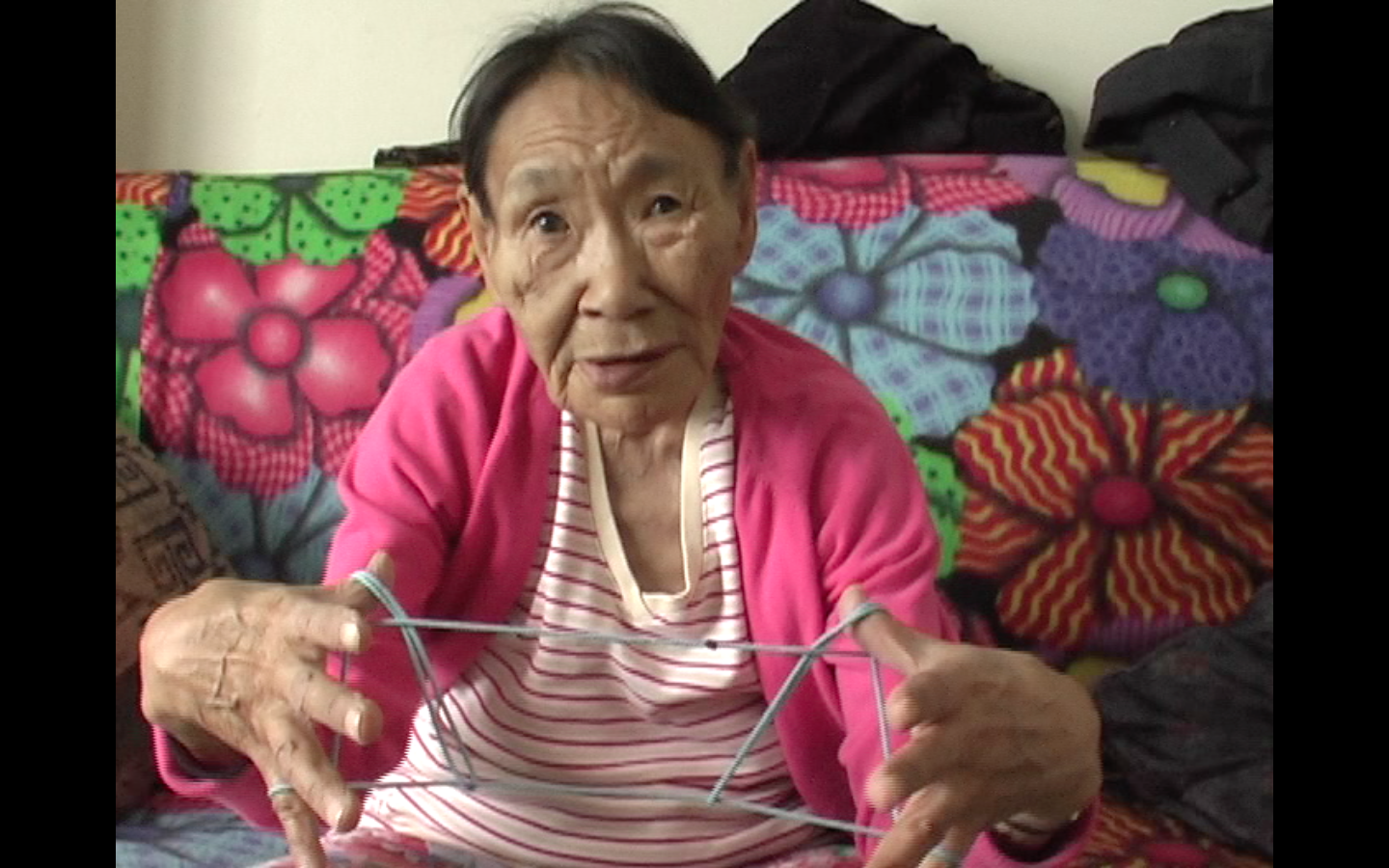
Contributor(s) : Herve PANIAQ, Iglulik, Nunavut, Canada (videos 1 & 2)
(and Celina IRNGAUT, interpreter, Iglulik)
Elisapi NUTARAKITTUQ, Iglulik (video 3)
Mary Niriungniq QULIKTALIK, Iglulik (photo)
Elisapi AWA, Iglulik -
Date : 2004-2021
- Information on the string figure
Iglulingmiut elders recall that, as children, they used to challenge one another with the same words -"tuutannguaq ingiaqaqqaa!"-, playing at making this figure the quickest in the evening.
This string figure is particularly widespread in the Inuit continuum: it was recorded in all the Inuit regions, generally under similar names, that originally refer to the (two) labrets or lip/chin ornaments (tuutak) which were worn by Inupiat and Inuit of the Canadian western Arctic in particular. This literal meaning was however not understood as such in most eastern regions (Canadian central and eastern Arctic, Greenland). In many Inuit groups, this figure was chiefly said to represent Tuutannguaq (or Tuutarjuk, Tuutannguarjuk, Tuutalirjuk...), the "spirit of the string figures" (ajarausiit inuat).
2. Bend 1 on 1f. 1 moves downward, passes under 2 and 5 5 loops, picks up 5f (on its back), and proximally enters space between 2f and 5n strings. Palms are facing away from the body.
3. Rotate hands one-half turn away from the body (1 thus picks up 5n while rotating downward), so that palms are now facing the body. Remove 2 and extend with fingers pointing away. This is the figure "TUUTANNGUAQ", referring to the spirit of the string figures.
"Tutaɳoäɳin" (Craig Harbour), "tutäɳuvit - the umiak" (Upernavik), "tutaɳuit - the umiak" (Ubekendt island), "aulatsivik - the umiak" (Egedesminde), "atoqät - meaning unknown" (Angmagssalik), Paterson 1949: 31, fig. 42, Tutäɳuvit. Figure(s) made with great speed.
"Tûtanguarjûk - les deux labrets (l'esprit des jeux de ficelle)" (Arviligjuarmiut), Mary-Rousselière 1969: 99-100, fig. 85a.
"Tuutarjuk - two labrets" (Kangirsujuamiut), Saladin d'Anglure 2003: 70, fig. 1.
"Labrets" (Kwethluk, Yupiit), Nicolai 2002: 216, fig. 19.
- Item references
-
Key words : String figure; String game; Inuit; Iglulik; Eastern Canada; Arctic
-
Publisher : Laboratory SPHERE (UMR 7219, University of Paris & CNRS)
-
Rights : Creative Commons / Attribution-NonCommercial-ShareAlike CC BY-NC-SA
-
Language : Inuktitut ; English
-
Location : Iglulik (Igloolik), Nunavut, Canada
-
Description : Iglulingmiut (Amitturmiut) Inuit string figure (Nunavut, Canada): symbolism, method of construction, references to the same figure as documented among different Inuit groups (Alaska, Canada, Greenland)