
UKALIARJUTTIAQ / UKALIARJUK, the arctic hare or rabbit
Geolocation
Relations
Item Relations
| This Item | related through similar or identical final pattern (with a different construction): | Item: TUKTURJUK, the caribou |
Graphical representation of this item’s relations
Citation
- Overall presentation
-
Name : UKALIARJUTTIAQ / UKALIARJUK, the arctic hare or rabbit
-
Creator : Céline Petit
-
Contributor(s) : Herve PANIAQ, Iglulik, Nunavut, Canada (video)
Abraham ULAAJURULUK, Iglulik (photo)
Elisapi NUTARAKITTUQ, Iglulik
Mary Niriungniq QULIKTALIK, Iglulik
Susan AVINNGAQ, Iglulik
Rosie Bonnie AMMAAQ, Iglulik -
Date : 2005-2021
- Information on the string figure
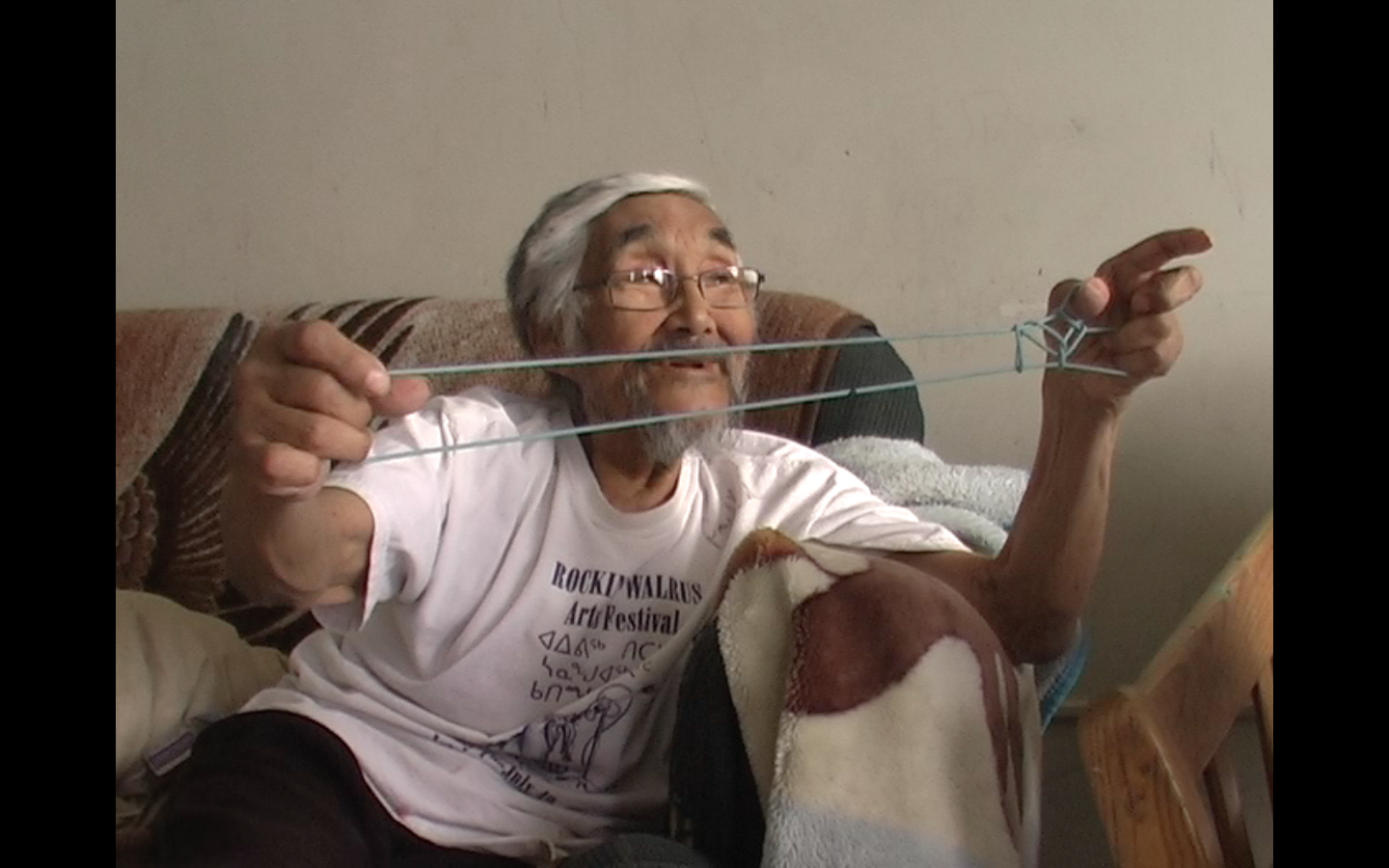
Iglulingmiut elders stress that this string figure, UKALIARJUTTIAQ, appears similar (ajjikulua, tukturjukuluquujigaluaq&uni) -but at a smaller scale- to the one known as TUKTURJUK, which depicts a caribou: both are however based on different methods of making (ajjigittia tautungit kisiani sanangit ajjigiinngi&utik). The method of execution for "the hare" begins with an unusual opening.
This string figure (of the hare) is one of the most widespread within the Inuit continuum: it was documented under the same meaning among most of the Yupiit and Inuit societies, from Siberia to the west coast of Greenland.
A variation of this string figure portraying "the hare carrying something on its shoulders/back" (ukaliarjutsiaq kakaktuartuq) or "the hare with its intestines as a collar" (ukaliarjutsiaq inaluaminik ujamigartuq) was recorded in the Iglulik area in the 1950s-1960s. This figure was also known as "ukalirjuk ujamikturjuk" among the Arviligjuarmiut (Mary-Rousselière 1969: 18, fig. 13), "ukaleq nigartalik" among the Inughuit (Holtved 1967: 136, fig. 2), "ukaleq alerminik nangmagtoq - hare with a line on its back, that drags a line (=entangled in a snare)" (Hansen 1974: 218, fig. 3).
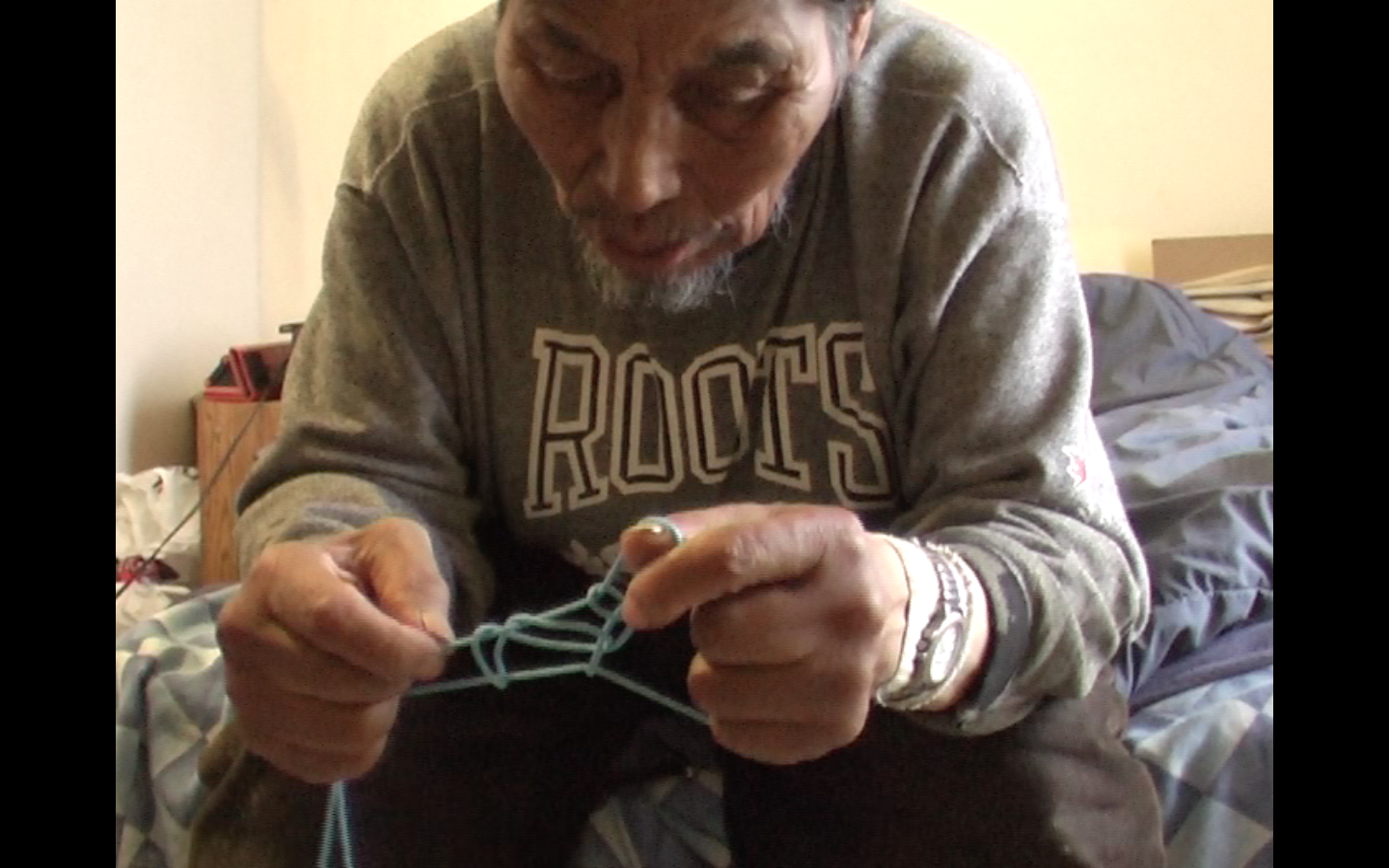
2. R1 and R2 enter the hanging loop from above. R1 proximally picks up proximal L1f (= R1 passes under proximal L1f and picks it up with its back) while R2 moves over distal L1f and picks it up with its side. R1 and R2 retrace their path through the loop hanging from L1 and spread apart. Do not extend hands completely, but keep LH and RH 5 to 10 centimeters away.
3. RH rotates one-half turn over L1, away from the body, so that R1 and R2 point downward (while L2345 point upward or away from the body). Insert L5 from above into R1 loop (with R1 pointing down here), and transfer R1 loop to L5 (= L5 hooks down R1n, closing to the palm. Remove R1).
4. Rotate RH one-half turn away from the body so that R2 ends up pointing upward and the palms of the LH and RH face each other. Distally transfer R2 loop to the tip of L1, so that it becomes upper/distal L1 loop. With the help of R1 and R2, Navajo the two proximal L1 strings over the new distal L1 string. (Remove R1 and R2). Keep palms facing each other.
This is the arctic hare (ukaliq).
"Ukaliartjuk - hare" (Aivilingmiut), Mathiassen 1928: 222.
"Caribou or hare" (Qairnirmiut), Birket-Smith 1929, I: 279.
"Ukaler(s)huk - the hare" (Coronation gulf), Rasmussen 1932: 281, fig. 35.
"Ukalitieɳ - the hare" (Craig Harbour), "UkalEq - the hare" (Cape York, Upernavik), "ukaluq - the hare" (Ubekendt Island), Paterson 1949: 14, fig. 2, the hare.
"Ukaleq" (Inughuit), Holtved 1967: 136, nr. 1.
"Ukalerjuk - le lièvre" (Arviligjuarmiut), Mary-Rousselière 1969: 17, fig. 12.
"Ukaliassiaq - arctic hare" (Kangirsujuamiut), Saladin d'Anglure 2003: 80-82, fig. 12.
"Hare" (by G. Kapatak, from Koliganek, Southwest Alaska, 1981), Claassen 2016, nr. 28.
- Item references
-
Key words : String figure; String game; Inuit; Iglulik; Eastern Canada; Arctic
-
Publisher : Laboratory SPHERE (UMR 7219, University of Paris & CNRS)
-
Rights : Creative Commons / Attribution-NonCommercial-ShareAlike CC BY-NC-SA
-
Language : Inuktitut ; English
-
Location : Iglulik (Igloolik), Nunavut, Canada
-
Description : Iglulingmiut (Amitturmiut) Inuit string figure (Nunavut, Canada): symbolism, method of construction, references to the same figure as documented among different Inuit groups (Alaska, Canada, Greenland)