
QAVVIATTIAQ, the wolverine
Geolocation
Relations
Item Relations
| Item: TUQ&UGJUK, oesophagus, gullet or trachea | (Often) part of the same series as | This Item |
Graphical representation of this item’s relations
Citation
Céline Petit, “QAVVIATTIAQ, the wolverine,” String figures, accessed October 10, 2026, https://stringfigures.huma-num.fr/items/show/317.
- Overall presentation
-
Name : QAVVIATTIAQ, the wolverine
-
Creator : Céline Petit
-
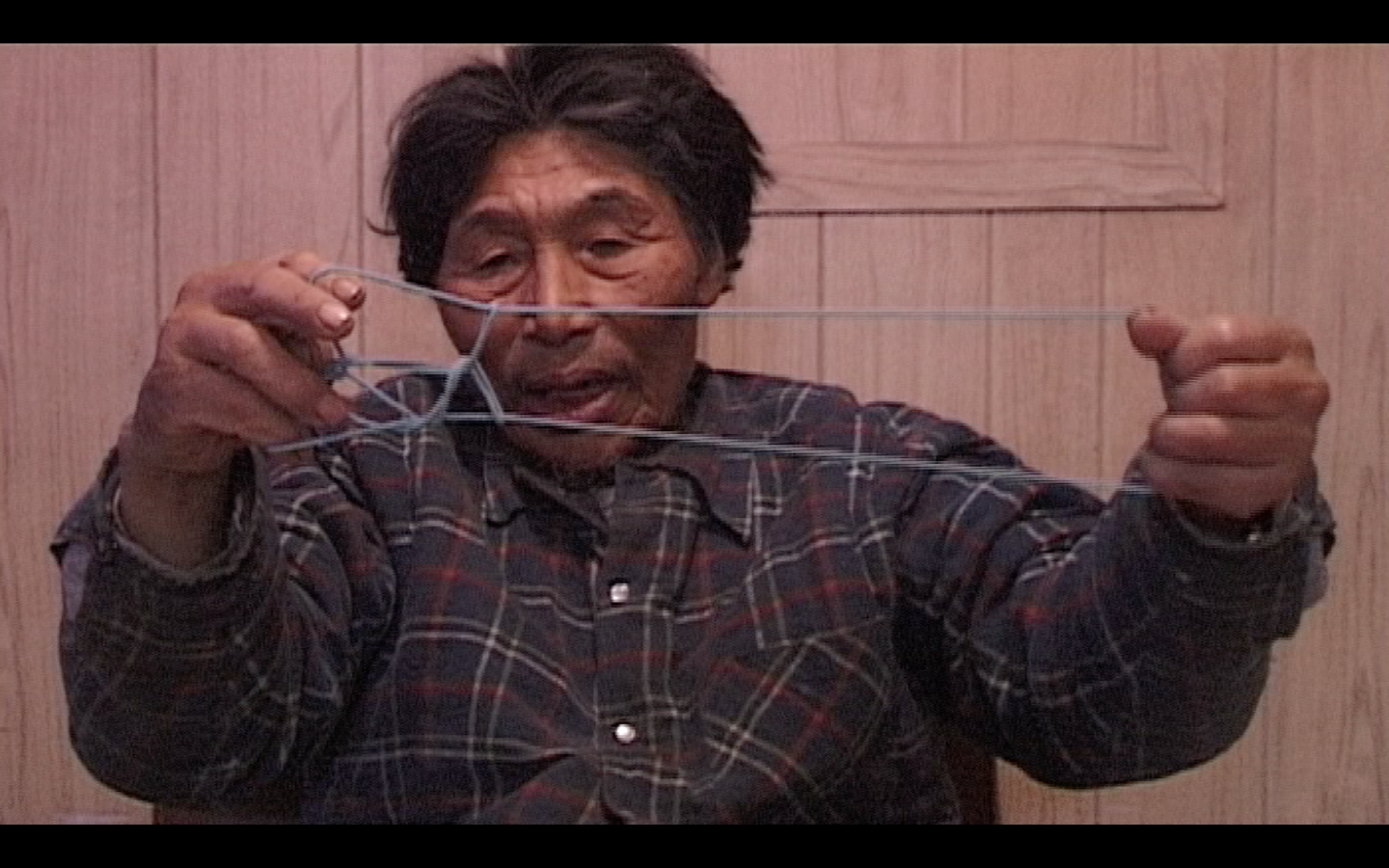
Contributor(s) : Herve PANIAQ, Iglulik, Nunavut, Canada (video)
Mary Niriungniq QULIKTALIK, Iglulik -
Date : 2011-2021
- Information on the string figure
This figure represents a wolverine (qagvik, qavvik) with its long tail in an upright position. Such a figure was recorded (with this meaning) mostly in Inuit societies of the Canadian central and eastern Arctic. Interestingly, many different methods for making the figure of the "wolverine" were/are known in these societies. Some of these methods start with a very unusual opening, like the one presented here. According to Iglulingmiut elders, the figure of the wolverine is not a mere or common string figure, since this figure is actually contained in "many other string figures, if not all". These assertions might be based on the fact that several string figures of the Inuit/Iglulingmiut repertoires (as "tuutannguaq", "ijitulirjuk", "niaquattiaq", "tamannuaqattaq"...) can indeed be transformed into the figure of the wolverine. The idea expressed is that QAVVIATTIAQ (or QAGVIGJUK, QAVVIGAARJUK) is virtually contained in -or can be obtained from- most of the figures of the repertoire.
H. Paniaq mentions that there are different ways for making QAVVIATTIAQ, the wolverine. Here, he presents two of them: the first one appears as one of the most direct paths to obtain that figure, while the second results from the partial -but almost complete- dissolving of the figure of the walrus' head (NIAQUATTIAQ).
H. Paniaq mentions that there are different ways for making QAVVIATTIAQ, the wolverine. Here, he presents two of them: the first one appears as one of the most direct paths to obtain that figure, while the second results from the partial -but almost complete- dissolving of the figure of the walrus' head (NIAQUATTIAQ).
Method 1 (video 1):
1. Put the string on the back of 1, with 1 pointing away from the body, and L1 and R1 approximately 5-6 inches apart. A long pendant loop is formed under the hands.
2. Press 1 against 2 (at its bottom, 2 pointing away), and swing the pendant loop away from the body so that it rotates (or turns towards the body) and crosses over/falls onto the string held straight between L12 and R12, and so that three loops hang from this string.
3. Proximally insert L5 into L1 loop. With L1f on its back, L5 remains bent, and L4 presses the L1f string against the back of L5 so that this string is seized in between L4 and L5.
4. Proximally insert L1 into R1 loop, and distally insert R345 into R1 loop. R345 holds R1f close to the R palm and slides down. Release R1.
5. Passing over the other part of the long pendant loop in the center of the figure, R1 proximally picks up the L45 string beyond and close to the point where it crosses the loop formed by lower L1n-upper L1f. With R2 moving over the L45 string, R2 hooks this string from the far side and pulls/hooks it down (with R2 bent/crooked, as well as R1) to extend. Release L5 and R2. All the strings are on 1 now. L5 hooks down lower L1f. (Rotate hands so that palms are facing each other).
6. Distally insert R2345 into triple R1 loops. R345 grab the three R1f and hold them to the palm. R2 pushes away the two upper R1n and hooks up lower R1n (rotating away from the body and up). Release R1.
7. With its back, R1 pushes down (and toward the center of the figure) the two strings that loop around R2 loop, and proximally picks up L1f in-between the two points where it crosses double R(3)45 near and far strings.
(...)
Method 2 (video 2):
1. Make the figure of the (walrus) head, NIAQUATTIAQ.
2. Release 2 loops. Release 5 loops. Distally (=from the far side) insert 2345 into 1 loop so that 2345 grab 1 palmar string, and remove 1. The configuration consists now in three pendant loops (the longest one in the middle, and two approximately of the same size on each side, that intercross on the far side approximately in the middle of the longest hanging loop) and a TV string. Hold the R2n string between R1 and R2 (removing R345). R12 move toward the body and drop R2 loop on the tip of L2 (R2 loop thus rotates one-half turn toward the inside). Remove R12.
3. R1 passes over upper/distal L2n (...)
(This method is very close to the one mentionned for QAVVIGAARJUK, the wolverine).
1. Put the string on the back of 1, with 1 pointing away from the body, and L1 and R1 approximately 5-6 inches apart. A long pendant loop is formed under the hands.
2. Press 1 against 2 (at its bottom, 2 pointing away), and swing the pendant loop away from the body so that it rotates (or turns towards the body) and crosses over/falls onto the string held straight between L12 and R12, and so that three loops hang from this string.
3. Proximally insert L5 into L1 loop. With L1f on its back, L5 remains bent, and L4 presses the L1f string against the back of L5 so that this string is seized in between L4 and L5.
4. Proximally insert L1 into R1 loop, and distally insert R345 into R1 loop. R345 holds R1f close to the R palm and slides down. Release R1.
5. Passing over the other part of the long pendant loop in the center of the figure, R1 proximally picks up the L45 string beyond and close to the point where it crosses the loop formed by lower L1n-upper L1f. With R2 moving over the L45 string, R2 hooks this string from the far side and pulls/hooks it down (with R2 bent/crooked, as well as R1) to extend. Release L5 and R2. All the strings are on 1 now. L5 hooks down lower L1f. (Rotate hands so that palms are facing each other).
6. Distally insert R2345 into triple R1 loops. R345 grab the three R1f and hold them to the palm. R2 pushes away the two upper R1n and hooks up lower R1n (rotating away from the body and up). Release R1.
7. With its back, R1 pushes down (and toward the center of the figure) the two strings that loop around R2 loop, and proximally picks up L1f in-between the two points where it crosses double R(3)45 near and far strings.
(...)
Method 2 (video 2):
1. Make the figure of the (walrus) head, NIAQUATTIAQ.
2. Release 2 loops. Release 5 loops. Distally (=from the far side) insert 2345 into 1 loop so that 2345 grab 1 palmar string, and remove 1. The configuration consists now in three pendant loops (the longest one in the middle, and two approximately of the same size on each side, that intercross on the far side approximately in the middle of the longest hanging loop) and a TV string. Hold the R2n string between R1 and R2 (removing R345). R12 move toward the body and drop R2 loop on the tip of L2 (R2 loop thus rotates one-half turn toward the inside). Remove R12.
3. R1 passes over upper/distal L2n (...)
(This method is very close to the one mentionned for QAVVIGAARJUK, the wolverine).
"Kabvia, kabviar(s)huk - the wolverine" (Craig Harbour, Canada), Paterson 1949: 44, fig. 134, method (e).
"Qabvigjuk nalugialik - le carcajou par la méthode lancée" (Arviligjuarmiut), Mary-Rousselière 1969: 53, fig. 48d.
"Qabvigjuk nalugialik - le carcajou par la méthode lancée" (Arviligjuarmiut), Mary-Rousselière 1969: 53, fig. 48d.
- Item references
-
Key words : String figure; String game; Inuit; Iglulik; Eastern Canada; Arctic
-
Publisher : Laboratory SPHERE (UMR 7219, University of Paris & CNRS)
-
Rights : Creative Commons / Attribution-NonCommercial-ShareAlike CC BY-NC-SA
-
Language : Inuktitut ; English
-
Location : Iglulik (Igloolik), Nunavut, Canada
-
Description : Iglulingmiut (Amitturmiut) Inuit string figure (Nunavut, Canada): symbolism, method of construction, references to the same figure as documented among different Inuit groups (Alaska, Canada, Greenland)