
KETKEEM
Geolocation
Citation
David Jabin, “KETKEEM,” String figures, accessed October 10, 2026, https://stringfigures.huma-num.fr/items/show/242.
- Overall presentation
-
Name : KETKEEM
-
Creator : David Jabin
-
Contributor(s) : Elsa de Unruh
-
Date : 2019-2020
- Information on the string figure
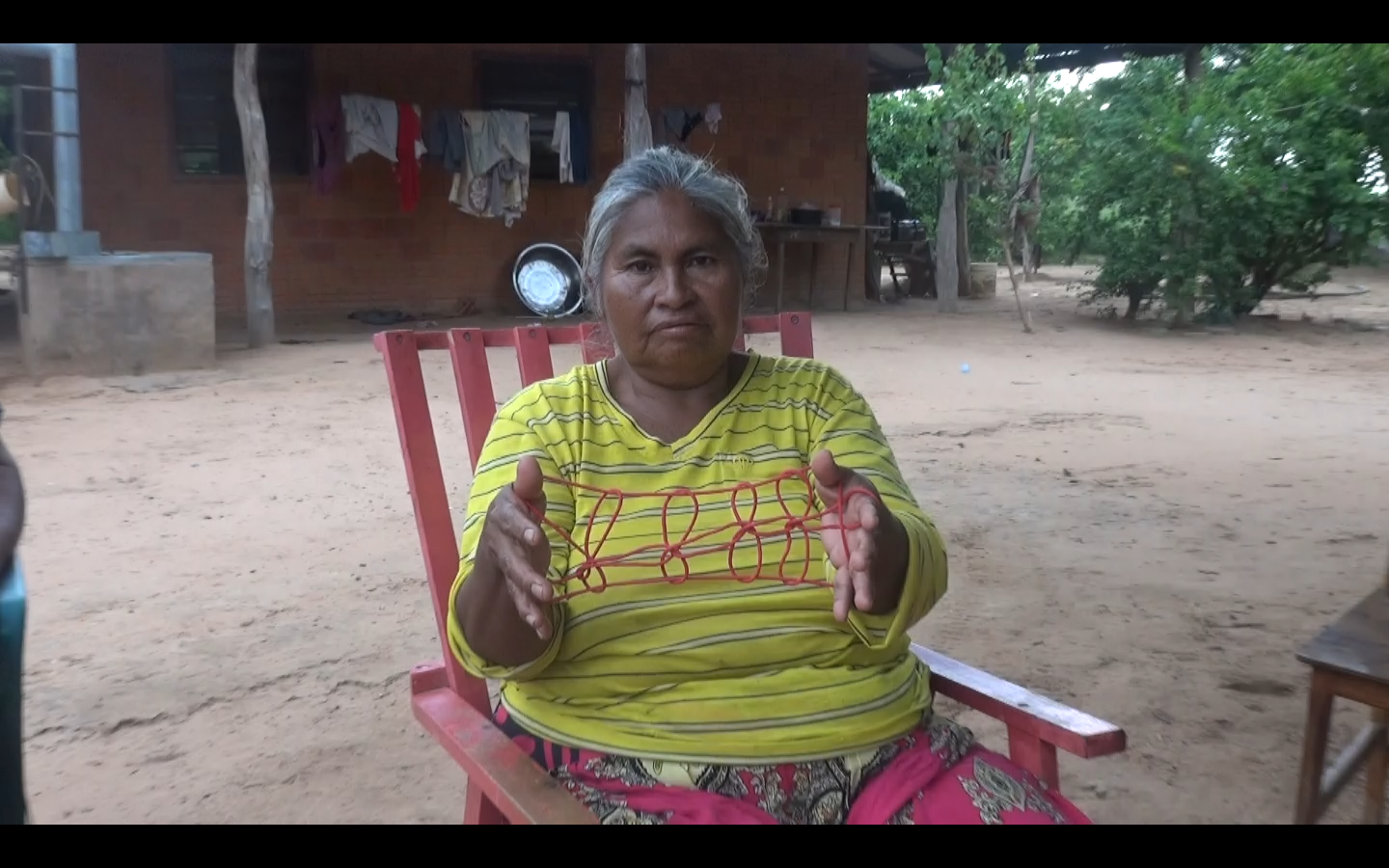
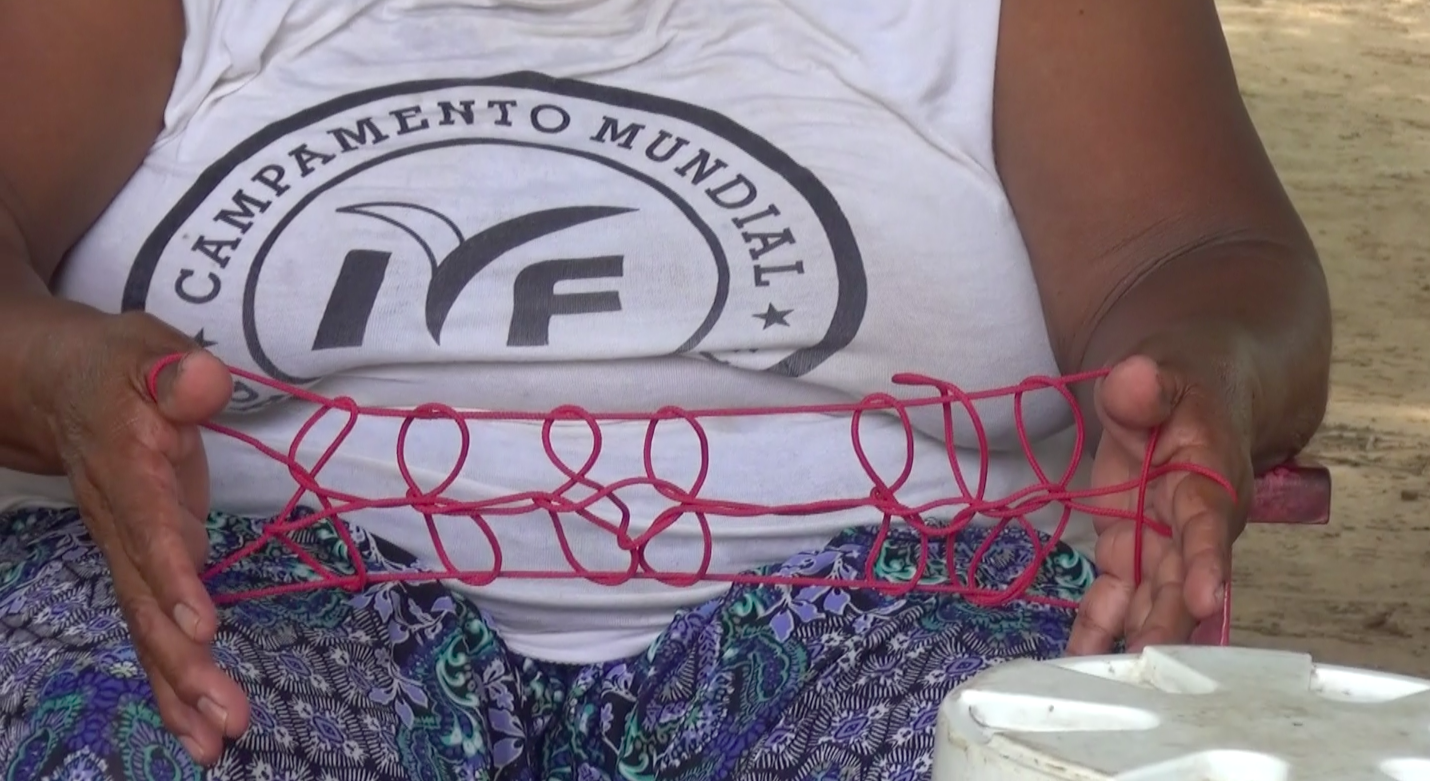
KETKEEM is a moving figure that represents for the Enlhet of Yalve Sanga people racing. The reiteration of a sub-procedure occurs as many times as the length of the string allows. Each reiteration produces a double vertical loop shape that represents a participant in the race. The figure is presented by alternately moving the hands up and down, which reduces the size of the figures and produces a distancing effect. In other groups of the Chaco, such as the Maka and the Nivacle people , this figure may have represented a ritual dance scene.
1. Opening A.
2. Release R2 loop and extend.
3. Release R1 loop and R5 loop, allowing them to hang.
4. Away from you, pass R2345 proximal to L2n and L2f, grasp L5n and coming back proximal to L2n and L2f, place it between L1 and L2.
5. Toward you, pass R2345 proximal to L2n and L2f and the, grasp L5n where it is hanging (after passing between L1 and L2). Then coming back proximal to all strings, place it between L1 and L2.
6. R2 and R1 rectively hook down the palmar L1n and L5n.
7. Strongly extend.
8. Repeat steps 4 to 7 as many times as possible, (it depends on the length of the string, 3 to 9 times seems fine).
9. After reaching the maximum number of reiterations, proximally insert R1 and R5 respectively into L1 and L5 hanging loops.
10. With the right hand slowly release all the L1 and L5 loops.
11. Proximally reinsert L1 and L5 in the to spaces on each side of L2 loop respectively between the ex L1f and the ex L5n.
12. Extend slowly.
2. Release R2 loop and extend.
3. Release R1 loop and R5 loop, allowing them to hang.
4. Away from you, pass R2345 proximal to L2n and L2f, grasp L5n and coming back proximal to L2n and L2f, place it between L1 and L2.
5. Toward you, pass R2345 proximal to L2n and L2f and the, grasp L5n where it is hanging (after passing between L1 and L2). Then coming back proximal to all strings, place it between L1 and L2.
6. R2 and R1 rectively hook down the palmar L1n and L5n.
7. Strongly extend.
8. Repeat steps 4 to 7 as many times as possible, (it depends on the length of the string, 3 to 9 times seems fine).
9. After reaching the maximum number of reiterations, proximally insert R1 and R5 respectively into L1 and L5 hanging loops.
10. With the right hand slowly release all the L1 and L5 loops.
11. Proximally reinsert L1 and L5 in the to spaces on each side of L2 loop respectively between the ex L1f and the ex L5n.
12. Extend slowly.
Rydén (1934: p. 38, n°4) published a photography of string figure collected among the Nivacle people of the Pilcomayo region by the Swedish ethnographer Erland Nordenskiöld in the early 20th century.Sturznegger (2017) collected the same string figure among the Nivacle people of this same region with the name YISHIVÔKLÔKLÍN (dancing men). Braustein (2017: 101) among the maka people of the Paraguay river collected a similar string figure called T’EQUELJU (the mask dance).
- Item references
-
Key words : String figures, Enlhet, paraguayan Chaco
-
Publisher : Laboratory SPHERE (UMR 7219, University of Paris & CNRS)
-
Rights : Creative Commons / Attribution-NonCommercial-ShareAlike CC BY-NC-SA
-
Format : jpeg, mp4, text
-
Language : Enlhet, spanish
-
Location : Village of Belen, Yalve Sanga indigenous community , Central Chaco, Boquerón departement, Paraguay, South America.
-
Description : Enlhet string figure, method of construction, linguistic data, cultural aspects